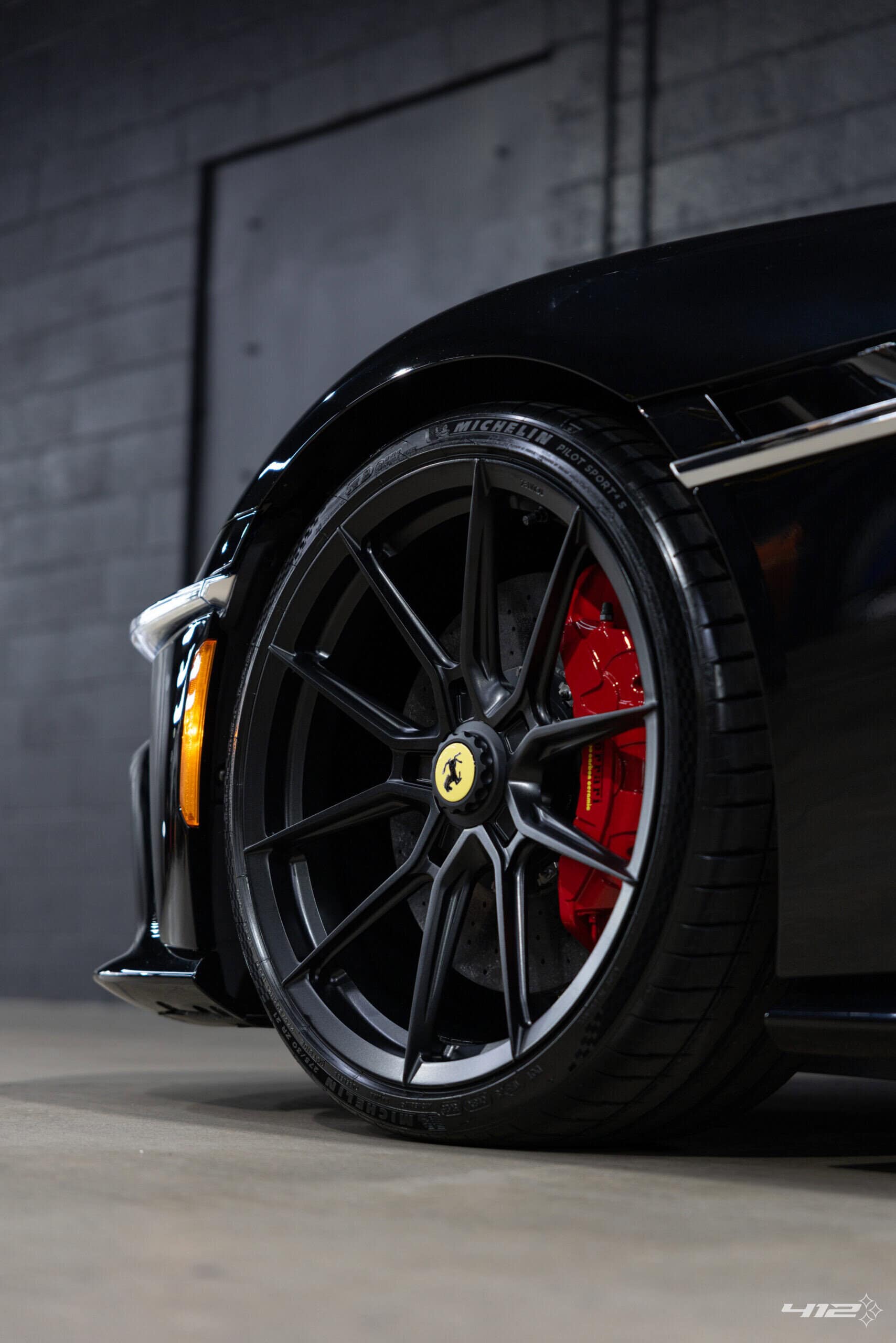
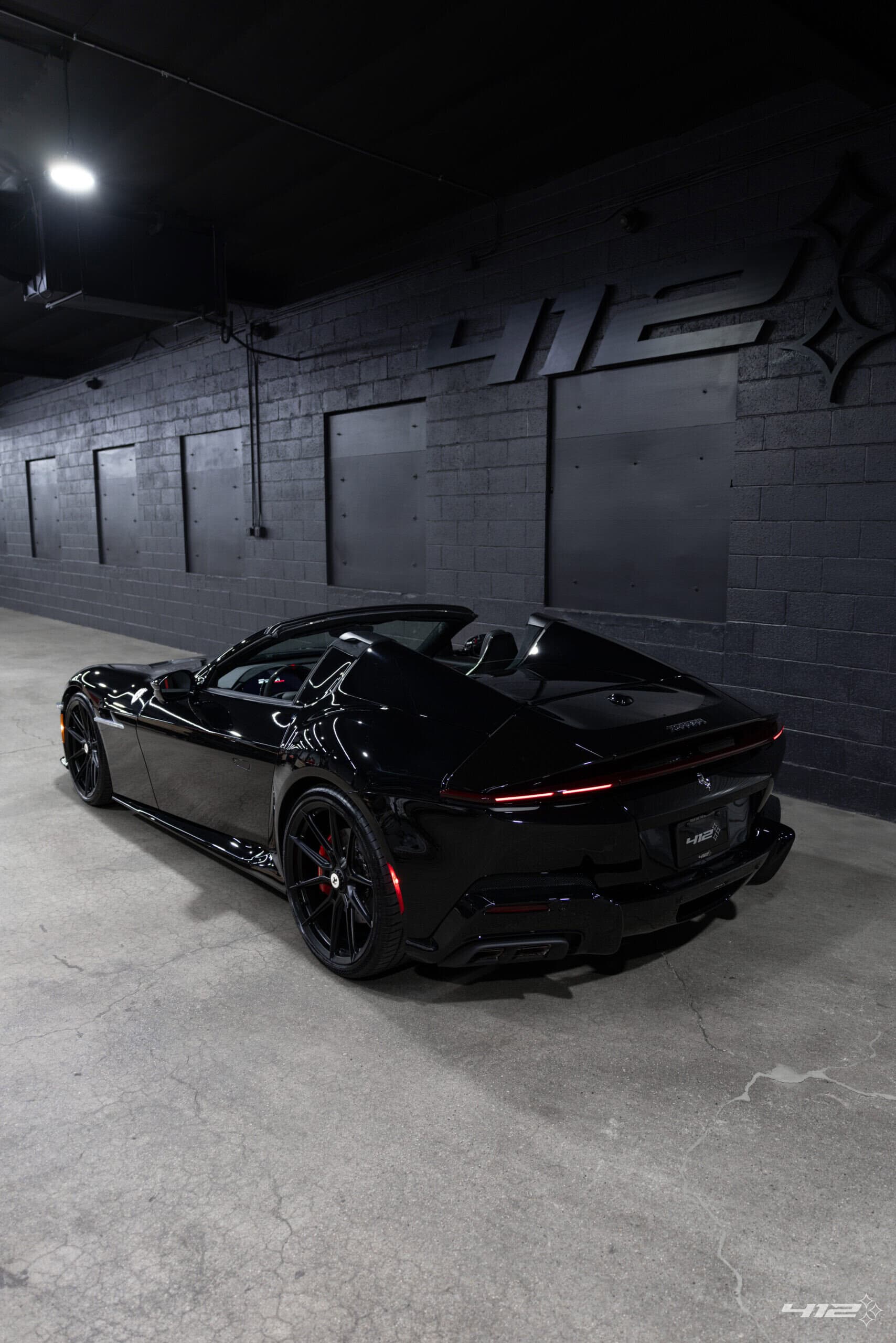
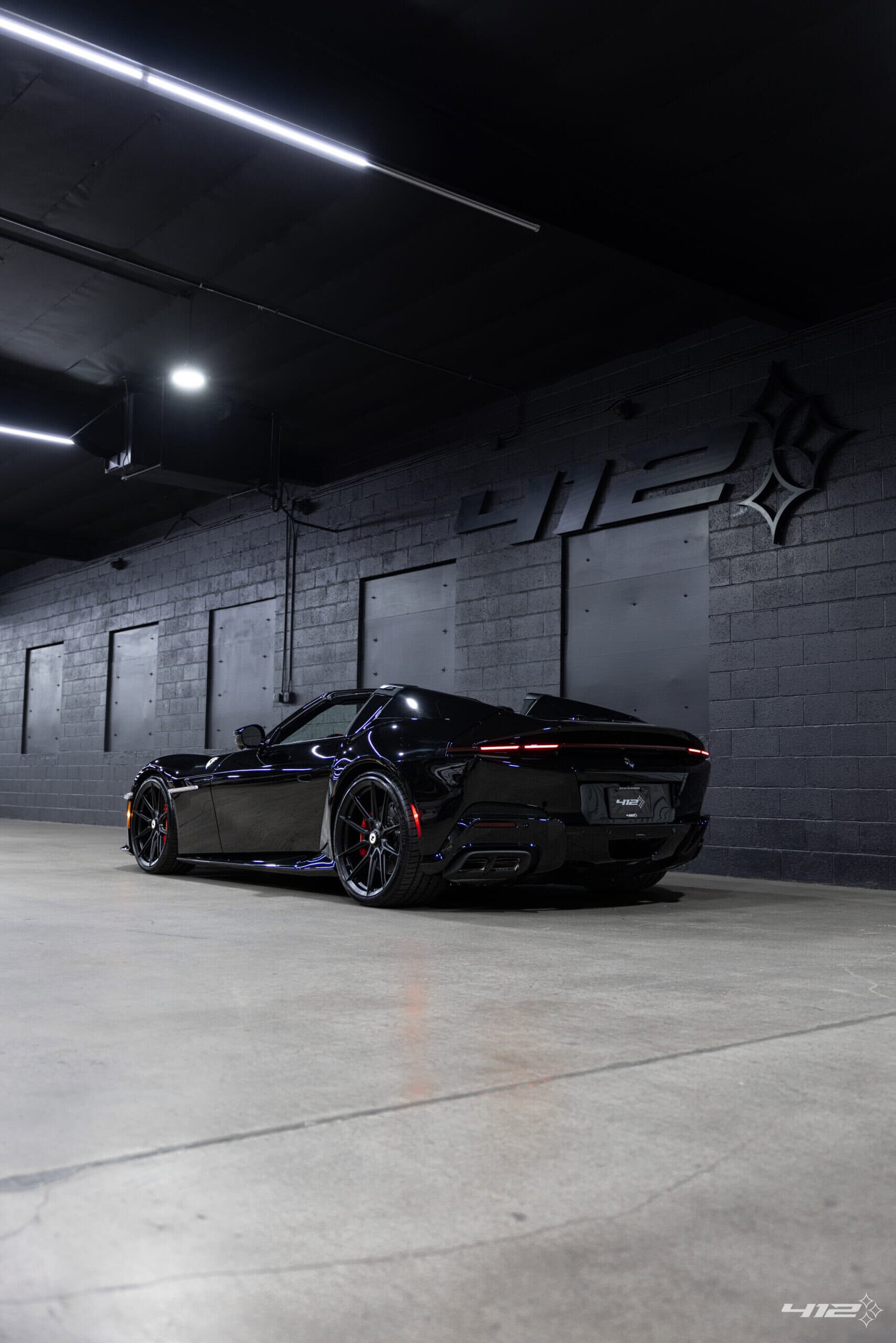
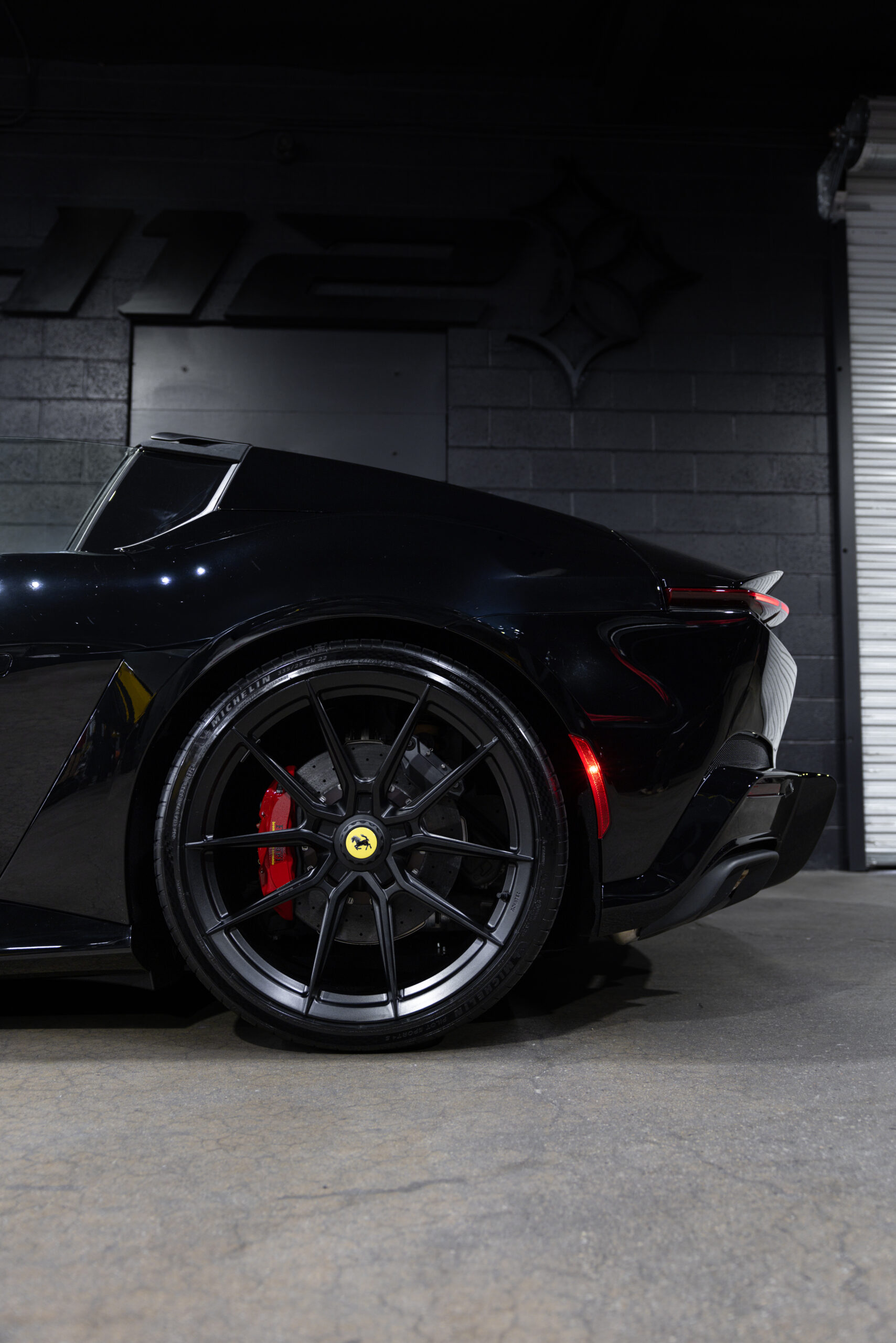
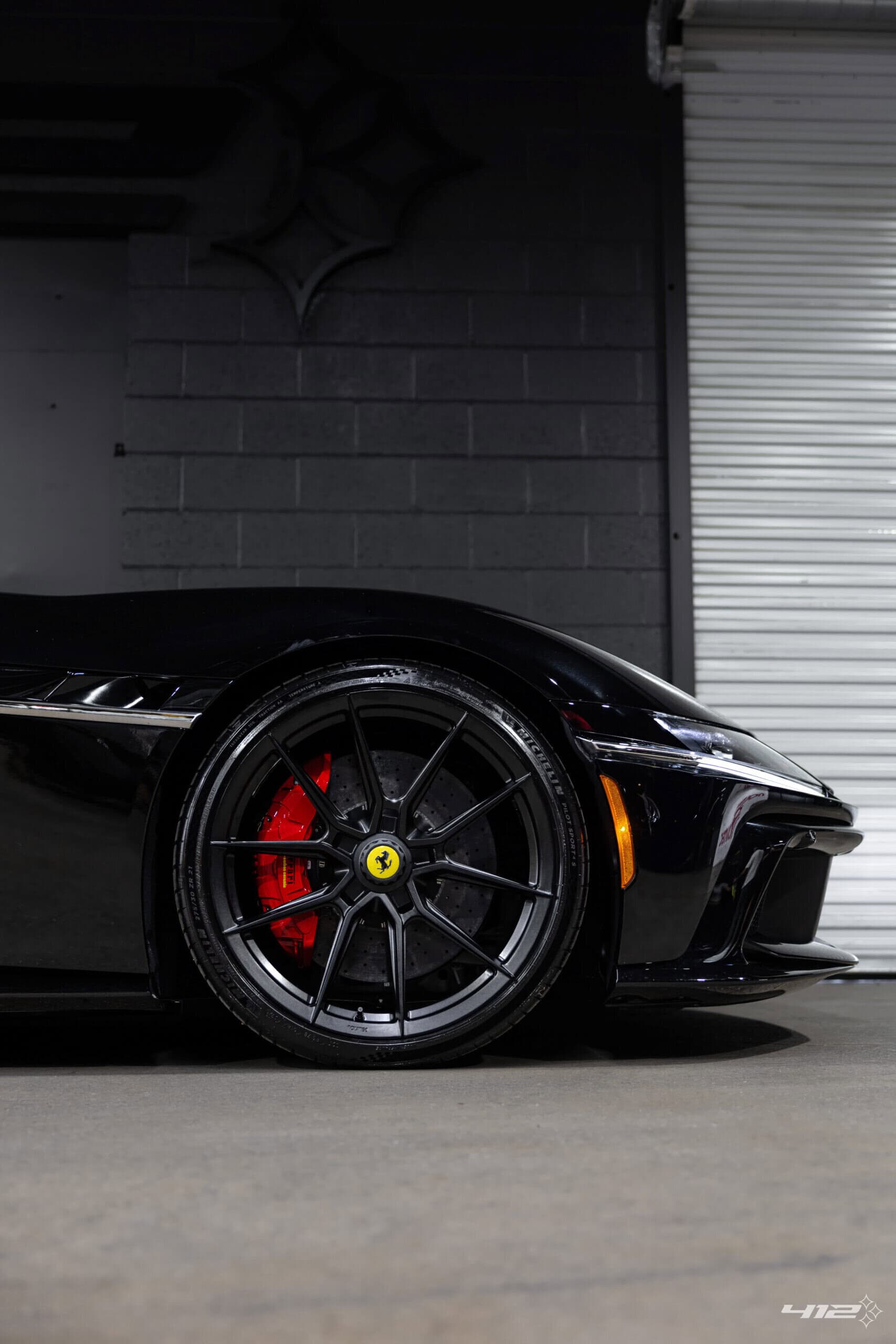
Carbon ceramic brakes use discs made from carbon fiber reinforced silicon carbide rather than cast iron. They are about half the weight of iron discs, resist heat and fade exceptionally well, produce very little dust and, in road use, may provide very long service life under suitable road conditions. Brembo quotes a typical life of around 150,000 km, about 93,000 miles, on the road, while Porsche quotes up to 300,000 km. Those figures are estimates, not replacement intervals; actual condition and manufacturer-specific inspection limits govern service decisions.
Carbon ceramic brakes are standard on many Ferrari, Lamborghini and McLaren models and a significant option on others, including Porsche, BMW M and Corvette. This guide explains how they work, how long they last and how to decide whether they suit the way you drive.
What carbon ceramic brakes are
A carbon ceramic disc is a composite of carbon fiber and silicon carbide. The material is formed and heat-treated in a multi-stage process that takes days to weeks, compared with around 90 minutes for a cast iron disc, according to Brembo. That process, together with the cost of the materials, is the main reason carbon ceramic discs are expensive.
Most carbon ceramic discs fitted to high-end cars come from Brembo SGL Carbon Ceramic Brakes, a joint venture formed in 2009 with production in Germany and Italy. Porsche introduced its Porsche Ceramic Composite Brake, known as PCCB, on the 911 GT2 in 2001, and Brembo’s carbon ceramic discs appeared on the Ferrari Enzo soon after. Today the technology appears on cars from almost every high-performance manufacturer.
What carbon ceramic brakes offer
The first advantage is weight. Porsche, SGL Carbon and Brembo all quote a saving of around 50 percent compared with iron. Because brake discs are unsprung, rotating mass, that saving improves steering response, ride quality and the feel of the car over uneven surfaces. On a previous-generation BMW M3 and M4, for example, Motor1 reported a front disc weight of 17.1 lb for carbon ceramic compared with 30.6 lb for iron.
The second is heat resistance. Carbon ceramic discs keep their performance through repeated hard stops, which is why they are associated with high-speed driving and long mountain descents.
The third is longevity and cleanliness. In normal road use, the discs wear very slowly, and they produce far less brake dust than iron, which keeps wheels cleaner between washes.
How long carbon ceramic brakes last
Manufacturer figures vary, but they all point to a long service life on the road. Brembo quotes approximately 150,000 km for road use, while Porsche quotes up to 300,000 km for PCCB. Brembo has also described the discs as lasting almost the entire life of a car in normal driving.
On track, wear follows a different pattern. Brembo quotes a disc life of around 2,000 km under extreme track use, because sustained high temperatures accelerate oxidation of the carbon in the disc.
Wear assessment depends on the rotor design and the manufacturer’s service procedure. Some systems use a specified minimum rotor weight, while others include thickness, surface condition and additional inspection criteria. Where the manufacturer specifies a minimum weight, a specialist may remove and weigh the disc using the prescribed procedure. Inspection should also account for chips, cracks, overheating and the manufacturer’s stated wear indicators. Brake pads, by contrast, wear in the usual way and are replaced as needed, using pads specified for carbon ceramic discs.
What to consider before specifying them
Carbon ceramic brakes have a slightly different character from iron. Pedal feel is at its best once the discs are warm, and some cars produce a light squeal at low speeds. Porsche notes that brake squeal under light braking is a normal characteristic rather than a defect, and that slightly firmer pedal pressure usually resolves it.
It is also worth understanding that larger, lighter discs do not shorten stopping distances on their own. In a single emergency stop, the tires set the limit. The benefits appear in repeated braking, reduced weight and long-term durability.
For frequent track use, iron discs are often recommended, and Porsche Australia has advised iron discs for club track days. Porsche continues to offer iron brakes on some of its GT models. For club track days, some owners fit iron discs and pads to keep wear away from the carbon ceramic set, then refit the originals for the road. Our track day preparation guide covers brake preparation in more detail.

Carbon ceramic or iron
For many road-driven high-performance cars, carbon ceramic brakes can be an excellent fit. They reduce weight, keep wheels clean, are well suited to spirited driving and, in normal use, last for many years. They are particularly well suited to heavy, powerful cars and to owners who drive briskly on canyon roads.
Iron brakes remain an excellent choice for owners who track their cars regularly, who prefer lower running costs or who value a familiar pedal feel when the brakes are cold. On some models, the decision is made for you, because carbon ceramic brakes are standard. On others, the choice is part of the specification, and our guide to the Ferrari Assetto Fiorano package shows how brakes, tires and suspension work together as a system.
Carbon ceramic brake conversions
The aftermarket now offers routes in both directions. Brembo introduced its carbon ceramic discs and pads to the aftermarket in 2024. Specialist manufacturers have also offered kits for specific models, so current availability is worth confirming for your car.
For owners who track their cars, iron conversion kits are available for many carbon ceramic equipped models. Iron disc and pad packages are available for models such as the Porsche 911 GT3 and GT3 RS. They are marketed to keep track wear away from the factory carbon ceramic discs, so the originals can be preserved for road use.
Any conversion should be matched to the car’s calipers, wheels and intended use, and fitted with pads designed for the disc material.
Caring for carbon ceramic brakes
A few habits help carbon ceramic brakes deliver their full life:
- Bed in new discs and pads as the manufacturer specifies. Ferrari, for example, specifies a short sequence of moderate stops for the SF90.
- Treat the discs gently during wheel changes. Careful handling and disc protectors keep the edges in good condition.
- Clean them with a pH-neutral shampoo or water, and keep acidic or alkaline wheel cleaners and tire dressings away from the discs.
- Replace discs in pairs on the same axle, as manufacturers such as Ferrari require.
- Let the brakes warm gradually before driving briskly, particularly on cool mornings.
- Have the discs inspected and weighed at regular intervals, and before any track event.
Carbon ceramic discs cannot be machined like iron discs, so careful handling and the right pads are what preserve them.

Carbon ceramic brakes in our studio
The right choice depends on how the car will be driven. For a road car that covers spirited miles in Southern California, carbon ceramic brakes are often ideal: lighter, cleaner and very long-lived. For a dedicated track car, iron may serve better, and some owners keep both sets.
The details that protect them matter as much as the specification. When new wheels are fitted through our wheel and tire packages, caliper clearance is confirmed and the discs are protected throughout the work. Disc condition must be established with the specific manufacturer’s inspection procedure rather than appearance alone.
At our Los Angeles facility, we work with owners of Ferrari, Lamborghini, McLaren, Porsche and other high-end cars on brakes, wheels and track preparation. If you are specifying a new car or preparing for a track day, our team is available to help.
Frequently asked questions
How long do carbon ceramic brakes last?
In road use, Brembo quotes around 150,000 km, about 93,000 miles, and Porsche quotes up to 300,000 km. Under extreme track use, Brembo quotes around 2,000 km, because heat accelerates wear.
Are carbon ceramic brakes worth it?
For a high-end road car driven briskly, they offer lower weight, strong fade resistance, very little dust and a long life. For frequent track use, iron discs are often the more practical choice.
How is carbon ceramic brake wear checked?
Follow the vehicle and rotor manufacturer’s inspection procedure. Some systems specify a minimum weight; others also require thickness measurements, wear indicators and a close inspection of the surface.
Do carbon ceramic brakes squeak?
Some can produce a light squeal at low speed or when cold. Porsche describes this as a normal characteristic of brakes under light pedal pressure rather than a fault.